Our dogs become family, holding a special importance and sentimental value that is hard to describe. When it's time to say goodbye, the last thing you need is more stress and confusion. You're likely asking, "What are my options?" and "What is the cost of dog cremation?" We understand. This guide is here to give you clear, straightforward answers. We'll break down the different types of services, what to expect from the canine cremation cost, and help you find a respectful way to honor your best friend.
One of the most difficult aspects of loving these loyal life companions is having to say goodbye to them. Dogs’ life spans rarely reach two decades, and many dogs have an average life span of 8 to 13 years.
Unfortunately, this means those of us fortunate enough to share our lives with a beloved pet will one day have to grieve their loss. When this time comes, you will have to make the decision of how to handle their remains once they have passed.
A time-honored tradition is to bury our beloved pets on our family property. However, for a growing number of pet owners living in big cities with fewer outdoor spaces, this type of burial isn’t always possible.
Pets are a remarkable addition to our lives, and grieving this incredible loss is difficult in ways that are difficult to describe. When the time comes to lay your pet to rest, there are options available beyond burial, including pet cremation.
Understanding the Pet Cremation Process
Animal cremation is becoming one of the most popular ways to lay our beloved pets to rest. The process of cremation is ethical, hygienic, and convenient for the growing number of households that are adopting and loving pets.
For anyone who is learning about all of this for the first time, some obvious questions will come to the forefront of your mind: What exactly is pet cremation? How different is it from human cremation? Are there different kinds of pet cremation? How much does it cost?
To help you as best we can during this challenging time, we’ve answered these questions and more so that you can feel confident with whatever method you choose to honor your pet’s remarkable life.
What Happens During the Process?
Pet cremation uses high heat in a sterile chamber to reduce your pet’s body to its basic elements, which are primarily bone fragments. Once this process is complete and a cooling period has passed, these fragments are carefully processed into a fine, consistent powder. These are the ashes, or “cremains,” that are returned to you. The entire procedure is handled with dignity and respect, ensuring a hygienic and ethical way to care for your pet’s final remains. It has become a trusted and common practice for families wanting to honor their pets in a thoughtful way.
How Long Does Cremation Take?
The time it takes for the cremation itself depends almost entirely on the size of your pet. For smaller animals, like cats or small dog breeds, the process can be as quick as 30 minutes to an hour. For larger dogs, it naturally takes a bit longer, sometimes up to two or three hours. The facility will handle all the technical details, so you don’t have to worry about this part of the process. Their main focus is on ensuring everything is done carefully and respectfully, no matter how long it takes.
Understanding Pet Ashes, or "Cremains"
When you receive your pet’s ashes, you might be surprised by the amount. The cremains typically weigh about 3-5% of your pet’s healthy body weight. For example, a 50-pound dog will yield about two to three pounds of ashes. These ashes are primarily composed of bone minerals, but importantly, they also contain the carbon from your pet’s body. This carbon is the very element of life that can be used to create a unique and beautiful memorial, like a pet memorial diamond, allowing you to carry their memory with you in a tangible and meaningful form.
Timeline for Getting Your Pet's Ashes Back
While the cremation itself may only take a few hours, the entire process of getting your pet’s ashes back usually takes about one to two weeks. This timeline accounts for several important steps, including transporting your pet to the facility, scheduling the private cremation, the cooling and processing period, and finally, preparing the ashes for you to take home. Reputable crematoriums are incredibly careful to ensure there are no mix-ups, and this methodical approach takes time. It’s always a good idea to ask your veterinarian or the crematorium for their specific timeline so you know exactly what to expect.
How Much Ash to Expect
As mentioned, the amount of ash you receive will be a small percentage of your pet’s total weight. Because larger pets require more time and resources to cremate, the cost of the service often increases with their size. While you will receive all of your pet’s ashes back from a private cremation, you don’t need to use all of them for a single memorial. For instance, creating a memorial diamond only requires about a half cup of ashes. This gives you the freedom to transform a portion into a diamond while also keeping the rest in an urn, scattering them in a favorite place, or creating other special remembrances.
What Is Pet Cremation?
Pet cremation is an ethical and hygienic way to lay your beloved pet to rest. Most cities or local counties have facilities designed to help make this process available to pet owners across the country.
Cremation is one of the most hygienic ways to manage an animal’s remains. By providing this service to communities, crematoriums can help to decrease the chances of disease and other health hazards related to animal remains.
Most local veterinarians can answer all of the questions you might have about where to find these services in your local community.
Is Pet Cremation the Same as Human Cremation?
Pet cremation and human cremation are similar in that they are both alternatives to burial that involve incinerating your loved one’s remains. Both processes must reach temperatures that range from 1400 to 1800 degrees Fahrenheit, and both result in cremated ashes.
One of the main differences between human cremation and pet cremation is the level of care given to the efficiency of the cremation process.
When a human body is cremated, there is a regulated multistep process to ensure that your loved one’s remains are treated with the utmost respect and that the body is completely isolated from other remains throughout the process.
With pet cremation, certain options provide the same care and respect as human cremation. However, the process is neither as formal nor as restrictive, and there are some options for pet cremation that do not isolate your remarkable pet’s remains from other furry friends.
To better understand this, you need to know about the different types of pet cremation available.
What Are Your Pet Cremation Options?
There are multiple kinds of pet cremation with different prices and memorial options. Here are the three main types of cremation options available for your beloved dog.
Cremation vs. Burial
For many families, burying a pet in the backyard is a time-honored tradition. However, this isn't always possible, especially for those living in cities or areas with specific regulations. This is a key reason why pet cremation is becoming such a popular choice. It offers a practical and accessible alternative, but the benefits go beyond convenience. Cremation is one of the most hygienic ways to manage a pet’s remains, helping to reduce health hazards. Perhaps most importantly, it allows you to keep your pet with you. Their ashes can be placed in an urn at home or even transformed into a beautiful keepsake, ensuring their memory stays close, no matter where you go. This portability provides a lasting connection that a stationary burial site can't always offer.
Communal Cremation: A Shared Farewell
This form of cremation is the least expensive and one of the most widely used. This service is primarily given out of convenience and is a hygienic way of disposing of an animal’s body once it has died.
In a communal cremation, multiple pets’ remains will be cremated at the same time. This is an ethical and hygienic option. However, it is impossible to retrieve your pet’s ashes from this option, limiting the ways in which your can memorialize your pet’s incredible life.
Partitioned Cremation: Semi-Private Services
Partitioned cremation or divided cremation is considered a middle-of-the-road option. This is a form of cremation that still involves multiple remains being cremated at the same time. However, there are dividers or partitions placed between the remains in an attempt to keep the ashes from mixing.
This method is not as expensive as private cremation since multiple remains are still being cremated at once. Still, partitioned cremation does allow you to receive your pet’s ashes to honor as you wish.
There is no way to be 100% certain in divided cremation that the ashes of your pet are not mixed with other pets, despite the partitions. However, this may be a cost-effective option for pet owners who want to symbolically keep their pet’s ashes but do not want to pay for private cremation services.
Private Cremation: A Personal Goodbye
Lastly, private cremation is the most expensive option. This is the only pet cremation option that provides peace of mind knowing that the ashes you receive back are entirely your pet’s. This method cremates one body at a time and does not run the risk of mixing ashes.
No matter which form of cremation you choose, they are all ethical and hygienic options for grieving pet owners.
Aquamation: A Water-Based Alternative
Beyond traditional flame-based methods, there is another gentle option known as aquamation. This process, also called alkaline hydrolysis, uses a combination of warm water, temperature, and alkalinity to accelerate the natural decomposition process in a quiet, controlled way. Many pet owners choose this path because it feels like a more peaceful farewell compared to the intense heat of flame cremation. It's also a more eco-friendly choice, as it uses significantly less energy and produces no harmful emissions, offering a greener way to say goodbye to a cherished companion.
One of the most meaningful benefits of aquamation is that families typically receive about 20% more of their pet’s ashes back. For many, this is a comforting outcome, as it provides more of their beloved companion's remains to keep in a special urn or to create multiple keepsakes. This ensures that every family member who wants a tangible reminder can have one. The pure, white ashes returned from aquamation are also perfect for creating a lasting memorial, like transforming them into a beautiful pet diamond that can be worn and cherished forever, keeping their memory close.
How Much Does It Cost To Cremate Your Pet Dog?
The cost of cremation for animals varies based on location. For instance, in areas with a higher population where the demand is greater such as a larger city, the cost for cremating a dog could be upwards of 300 or 400 dollars. In a smaller, rural area where there are more options for your pet’s remains, the cost could be dramatically lower.
On average, the general rule of thumb is that the style of cremation and size of your pet does matter. If you choose a communal cremation, a crematorium will likely offer a flat rate.
However, as you progress toward private cremation, the size of your pet will affect the overall cost. If you are going to cremate a small lap dog, the price can be substantially less than if you were to cremate a Mastiff.
Another factor to keep in mind is that, generally, a crematorium will be a separate entity from a veterinary clinic. This means that there will typically be extra fees associated with transporting the remains of your pet, and there may be additional fees for collecting their ashes.
Typical Price Ranges for Dog Cremation
When you’re planning for a pet’s cremation, it helps to have a clear idea of the costs involved. The final price depends heavily on the type of cremation you select—private, partitioned, or communal—and is further influenced by your dog’s size and your geographic location. Generally, you can expect a communal cremation to cost between $50 and $150, as the ashes are not returned to you. For a private cremation, where your pet is cremated alone and you receive their ashes, the price typically ranges from $150 to over $400. Understanding these key factors will help you find a service that honors your companion while fitting within your budget.
Costs Based on Your Dog's Weight
One of the most significant factors in determining the cost of a private or partitioned cremation is the size of your dog. Simply put, larger dogs require more time and energy to cremate, which is reflected in the price. As one provider notes, cremating a small lap dog will be substantially less expensive than cremating a Mastiff. Most crematoriums use a tiered pricing structure based on weight, with common brackets like 1-30 lbs, 31-60 lbs, and so on. When you request a quote from a provider, be prepared to share your dog’s approximate weight to get the most accurate estimate for their services.
How Location Impacts Pricing
Where you live also plays a major role in how much you’ll pay for cremation services. Costs tend to be higher in large metropolitan areas compared to smaller towns or rural regions, sometimes by as much as 30-50%. This difference is often due to higher operational expenses in cities, including rent, labor, and transportation. If you live in a major city, it might be worth exploring providers in nearby suburban or rural areas to see if there's a significant price difference, though you should also factor in any potential transportation fees for you or for the service provider.
Potential Fees for Additional Services
The initial quote for cremation may not cover everything, so it’s important to ask about potential extra charges for a complete picture of the final cost. Many providers offer additional services that can add to the bill, such as picking up your pet from your home or veterinarian's office, especially if it’s after hours or on a weekend. Other common fees include charges for travel distance, keepsakes like paw or nose prints, and upgraded urns or custom engravings. If you wish to be present for the cremation, some facilities offer a viewing or witnessing service for an additional fee.
Does Pet Insurance Cover Cremation?
While pet insurance is a lifesaver for unexpected vet bills, it’s important to know that most standard plans do not cover end-of-life expenses like cremation. The primary purpose of pet insurance is to manage the costs of accidents and illnesses that occur during your pet’s life. However, it’s always a good idea to review your specific policy. Some comprehensive wellness plans or add-on riders might offer a small allowance for euthanasia or cremation. If you’re unsure, contact your insurance provider directly to clarify what your plan includes so there are no surprises.
Tips for Managing Cremation Costs
Navigating expenses while you’re grieving is incredibly difficult, but a little planning can help ease the financial strain. There are several ways to manage the cost of your dog’s cremation, from choosing more affordable options to seeking financial support if you need it.
How to Save Money on Pet Cremation
If you don't feel the need to have your pet's ashes returned, communal cremation is the most affordable choice. However, if you want to keep the ashes for a memorial, such as creating a beautiful pet diamond to wear, you will need to choose a private cremation. To manage this cost, it’s wise to call a few different providers in your area to compare prices. Don’t hesitate to ask for an itemized list of services to see exactly what’s included. Some crematoriums may also offer packages that bundle services, like the cremation and a basic urn, at a discounted rate.
Financial Assistance Options
If the cost of cremation feels overwhelming, please know that there are resources available to help. Start by speaking directly with your veterinarian or cremation provider; some may offer flexible payment plans to spread the cost over time. You can also reach out to local animal welfare organizations, as they sometimes have programs or funds to help pet owners with end-of-life expenses. The Humane Society also maintains a list of national organizations that may be able to offer financial assistance during this difficult time.
How to Choose a Pet Cremation Provider
Choosing a cremation provider is one of the most important decisions you’ll make in honoring your pet. This is the team you’re entrusting with the final care of your beloved companion, so it’s essential to find a service that is both reputable and compassionate. During such an emotional time, it can be hard to think clearly about logistics, but a little research upfront can provide immense peace of mind. The right provider will be transparent about their process, answer your questions patiently, and treat your pet with the dignity they deserve. Think of this as your final act of love and care for your friend. Taking the time to find a trustworthy crematorium ensures that your pet’s farewell is handled respectfully, and it gives you confidence in the ashes you receive back, which are a tangible connection to the beautiful life you shared together.
Finding a Reputable Service
Your veterinarian is often the best place to start when looking for a cremation service. They typically have established relationships with local providers and can recommend ones they trust. Beyond your vet’s advice, look for a crematorium that values transparency. A reputable provider should be willing to walk you through their entire process and may even offer a tour of their facility. It’s also a good idea to check if they are members of a professional organization, like the International Association of Pet Cemeteries and Crematories (IAOPCC). Most importantly, ask about their tracking system. They should use something like a unique ID tag to guarantee that the ashes you receive are your pet’s, which is crucial if you plan to create a lasting memorial like a pet diamond.
Key Questions to Ask Before Deciding
When you contact a potential provider, it’s helpful to have a list of questions ready. This ensures you get all the information you need to make a confident choice. Start by asking about the types of cremation they offer—private, partitioned, or communal—and what each one entails. Inquire specifically about their identification and tracking process from start to finish. You’ll also want to understand the pricing structure. Ask what’s included in the base price, such as a standard urn or a paw print, and if there are extra fees for services like home pickup, after-hours calls, or weekend services. Finally, ask about the timeline, so you know when you can expect to have your pet’s ashes returned to you. A good provider will answer all these questions clearly and without hesitation.
Red Flags to Watch Out For
Just as there are signs of a great provider, there are also red flags that signal you should look elsewhere. Be cautious if a provider is vague or can’t clearly explain the differences between their cremation options. A major warning sign is an inability to detail their tracking system; you should feel completely confident that they can guarantee the identity of your pet’s remains throughout the process. Another red flag is a "mystery total" or a price that doesn't clearly outline what is included. A trustworthy crematorium will provide a transparent, itemized breakdown of costs. Ultimately, trust your intuition. If you feel rushed, dismissed, or uncomfortable for any reason, it’s okay to find another provider who offers the compassion and transparency you and your pet deserve.
Turn Your Pet's Ashes into a Memorial Diamond
If you choose to cremate your pet, there are many ways in which you can use their ashes to honor their legacy and memory. Some choose to display the ashes in their homes; others may scatter them somewhere meaningful to their pet or turn the ashes into a piece of jewelry.
When it comes to memorializing your loyal companions, having their ashes turned into a memorial diamond is a beautiful way to keep a part of them with you throughout your life. A memorial diamond can act as a physical reminder of the love you shared with your pet and the many ways they shaped your life.
This journey is unique, using state-of-the-art technology to grow pure, authentic diamonds using the carbonic components of your pet’s ashes.
The seven-stage process involves taking the ashes that are produced from your pet’s cremation and purifying them down to their base carbon elements.
Once this carbon has been extracted from your beloved pet’s remains, it is placed in specialized machines that mimic the conditions of the Earth’s mantle, where diamonds are naturally formed. This process exposes the carbon to intense heat and pressure, which forms a genuine diamond.
Next, master cutters examine the diamond for inclusions before cutting them into their perfect shape. Each diamond is assessed for quality by IGI, one of the leading diamond assessment agencies. Finally, you have the option to customize your memorial diamond. You can choose a color, a setting, and an inscription if you wish.
Deciding What to Do with the Ashes
Once you receive your pet's ashes, the next step is deciding how to honor their memory. This is a deeply personal choice, and there's no right or wrong answer. Many people find comfort in keeping the ashes at home in a special urn, creating a physical place to remember their companion. Others choose to scatter the ashes in a favorite park, hiking trail, or backyard spot where their dog loved to play. You can also bury the urn in a pet cemetery or on your property. Beyond these traditional paths, you can transform the ashes into a lasting keepsake, like glass art or a piece of jewelry, allowing you to carry a part of them with you always.
Choosing the Right Urn Size
If you decide to keep your pet’s ashes in an urn, one of the first practical questions is what size to get. A reliable guideline is to allow for one cubic inch of space for every pound your pet weighed. For example, if your dog weighed 70 pounds, you’ll need an urn with a capacity of at least 70 cubic inches. It’s always a good idea to choose an urn that’s slightly larger than you think you need, just to be safe. Urns come in countless styles, from classic wooden boxes to modern ceramic vases, so you can find something that truly reflects your pet’s personality and fits beautifully in your home.
Creating a Lasting Tribute for Your Pet
The important part of commemorating your pets is that you keep their memories with you forever. Whether you choose to create a memorial diamond from cremated remains or bury your beloved dog in the backyard, the impact they had on your life cannot be overstated.
If you do decide that a memorial diamond is a way you want to honor your pet’s legacy, know that there will be no other precious stone quite like the diamond created from the essence of your loyal companion.
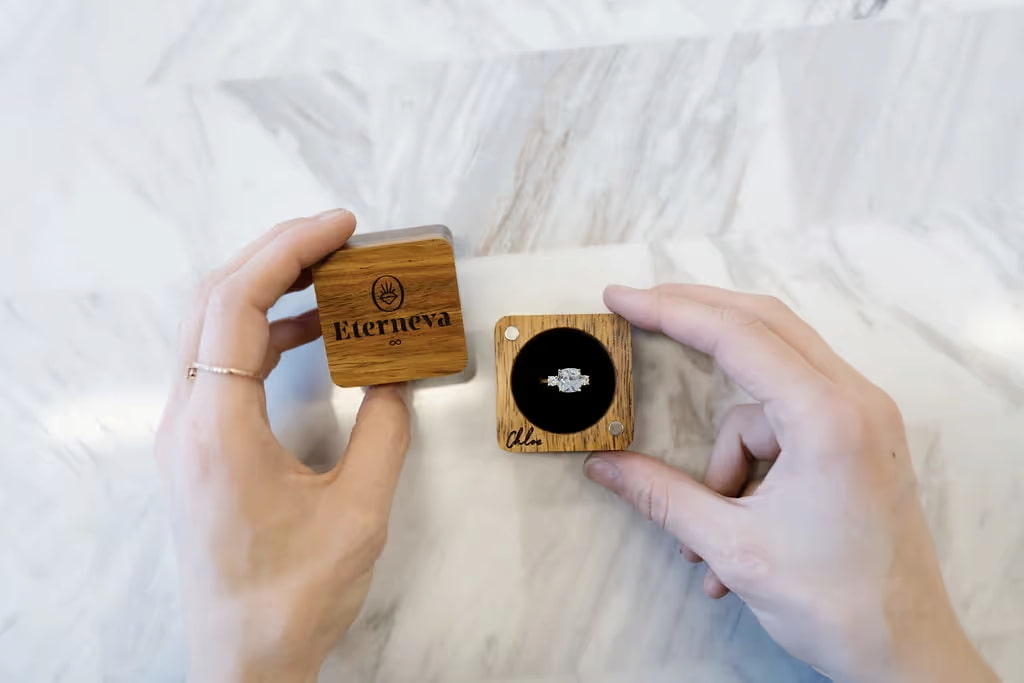
Working with a trained set of professionals, Eterneva can create a beautiful, unique diamond that you will have forever. More importantly, Eterneva is honored to help you share your pet’s remarkable story, now and forever.
Sources
Comparative longevity of pet dogs and humans: implications for gerontology research | NCBI
Activities for Grieving Children | American Humane Society
How Is Pet Cremation Done? | Cremation Resource
Frequently Asked Questions
What's the real difference between private and communal cremation? The main difference comes down to whether you want to receive your pet's ashes back. With a private cremation, your dog is cremated alone, and their specific ashes are returned to you. This is the option you need if you plan to keep the ashes in an urn or create a memorial like a diamond. Communal cremation is a more affordable choice where multiple pets are cremated together, and because the ashes are co-mingled, they are not returned to the owners.
How can I be sure the ashes I get back are actually my pet's? This is a completely valid and important concern. A reputable crematorium will have a strict tracking system in place to guarantee the integrity of the process. They often use a unique metal tag that stays with your pet from the moment they are picked up until their ashes are returned to you. Never hesitate to ask a provider to explain their identification and tracking process in detail; their willingness to be transparent is a great sign of a trustworthy service.
Is aquamation a better option than traditional cremation? One isn't necessarily "better" than the other; it's about what feels right for you and your pet. Aquamation is a gentle, water-based process that many find to be a more peaceful alternative to flame-based cremation. It's also more environmentally friendly and typically returns about 20% more ashes. If the idea of a quieter, greener process appeals to you, or if you want more ashes for multiple keepsakes, aquamation is an excellent option to consider.
I want to create a memorial diamond, but do I have to use all of my dog's ashes? Not at all. Creating a memorial diamond only requires a small amount of ashes, typically about a half cup. This gives you the flexibility to honor your companion in multiple ways. You can create a beautiful diamond to wear and keep close, while also keeping the remaining ashes in an urn at home or scattering them in a place that was special to your dog.
My vet offered to handle the cremation. Should I just go with their recommendation? Your veterinarian's recommendation is a wonderful starting point, as they usually partner with local services they know and trust. However, you always have the right to choose the provider yourself. It's perfectly okay to ask your vet for the name of the crematorium they use so you can call them directly. This allows you to ask your own questions about their process and pricing to ensure you feel completely comfortable and confident in the care your pet will receive.
Key Takeaways
- Cremation costs depend on three key factors: The final price is determined by the type of service you select (private, partitioned, or communal), your dog's size, and your geographic location. A private cremation, which is necessary to get your pet's ashes back for a memorial, typically starts around $150.
- Ask the right questions to find a trustworthy provider: To ensure your pet is treated with respect, inquire about the facility's tracking system to guarantee you receive the correct ashes. It's also wise to request an itemized list of all potential fees for a clear understanding of the total cost.
- Ashes offer a tangible way to honor your pet's memory: You have many personal options for your pet's ashes, from keeping them in an urn to creating a unique keepsake. Transforming a small portion into a memorial diamond allows you to carry their memory with you in a beautiful, lasting form.