The Light We Carry
Love doesn’t simply end when a life ends. It changes.
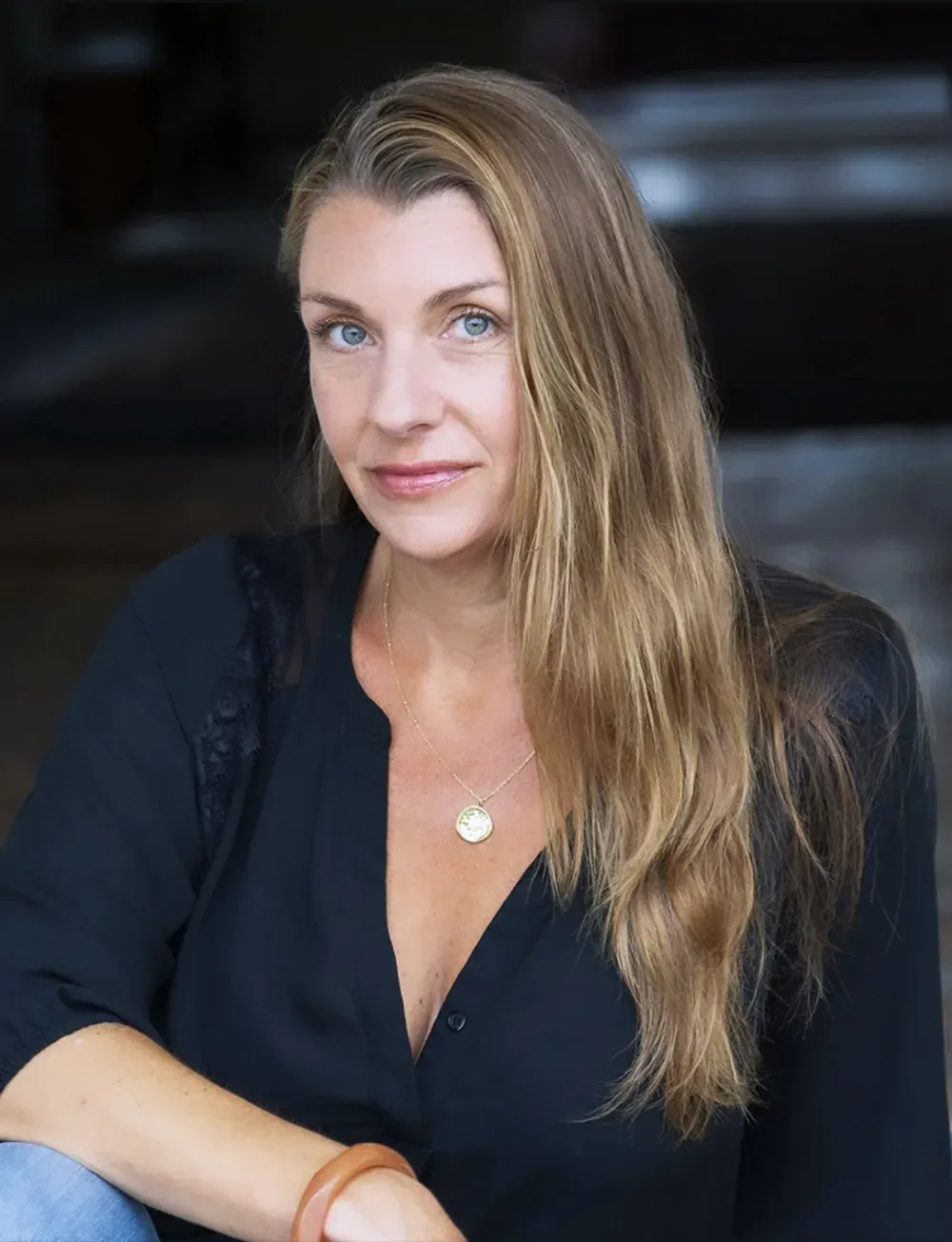
Claire Bidwell Smith, LCPC · Therapist, Grief Expert & Author
A licensed therapist and best-selling author, Claire draws on nearly two decades of clinical experience with grief.
About this conversation
The Light We Carry is an Eterneva series of conversations with people who spend their lives close to grief, death, and remembrance.
Claire Bidwell Smith is a licensed therapist, an internationally recognized grief expert, and the best-selling author of five books published in 22 countries. Drawing on nearly two decades of clinical experience, including her work in hospice and private practice, she has become a trusted voice in grief and emotional healing.
We spoke with her about losing both of her parents as a young adult, why she encourages people to turn toward their grief, the role keepsakes play in continuing bonds, and the light she carries from this work.
“Sometimes a keepsake simply gives our love somewhere to land.”
What drew you to grief work? Has your own experience of loss shaped it?
My mother died when I was 18, and my father died when I was 25. By the time I was a young adult, I’d lost both parents and was trying to figure out how to build a life without the two people who had brought me into the world. I think what drew me to grief work, initially, was a desire to understand my own experience. I was struck by how little our culture seemed to understand about grief, how uncomfortable people were with it, and how quickly the world expected you to return to normal after something that had fundamentally changed your life.
But I quickly discovered beautiful depths and incredible meaning in being able to sit with someone else’s pain without needing to fix it or make it go away. I’ve now spent about 20 years working with grieving people, and I still think of myself as both a student and a practitioner of grief. My own losses inform my work every day, but so do the thousands of people I’ve had the privilege of accompanying through theirs.
One thing I’ve learned is that grief isn’t just about death. It’s about love, identity, memory, and how we continue to find meaning and hope after our lives have been irrevocably changed.
Tell us about a moment with a client that changed how you understand grief.
Rather than one particular moment or client, I’ll tell you that one of the things that has most profoundly shaped my understanding of grief is working with people whose losses are so devastating that there is simply no way to make sense of what has happened. I’ve worked with parents whose children have died suddenly and tragically, people who have lost loved ones to suicide, and families whose entire understanding of the world has been shattered in an instant.
Early in my career, I think I felt a greater responsibility to help people find meaning in their losses. But over time, and particularly through my work with bereaved parents, I’ve come to understand that sometimes there is no meaning to be found in the death itself. The meaning, if it comes, is in what we do with our love afterward.
I’ve sat with people who have experienced unimaginable losses and watched them slowly find ways to reengage with life, not because they’ve accepted that what happened was somehow okay, but because they’ve discovered that their love for the person who died still has somewhere to go. That distinction has fundamentally shaped how I approach grief.
How would you describe your approach to grief in your own words?
I believe grief deserves our attention, our curiosity, and our compassion. So much of what we’re taught about grief involves trying to get through it, get over it, or move on from it. My approach is almost the opposite. I encourage people to turn toward their grief rather than continually trying to outrun it.
That doesn’t mean spending every waking moment immersed in sadness. It means making room for the reality of what we’ve lost, allowing ourselves to feel what we feel, and recognizing that grief is a natural response to loving someone who is no longer physically here.
I refer to this as Conscious Grieving (also the title of my most recent book). It’s the practice of engaging with our grief intentionally, rather than treating it as something that needs to be conquered or cured. I also believe that grief and joy can coexist. We can miss someone terribly and still have a beautiful life. We can laugh, fall in love, raise children, pursue our dreams, and experience enormous happiness while continuing to carry sorrow. The goal isn’t to become someone who no longer grieves. It’s to become someone who knows how to live fully alongside our grief.
What helps you know that someone is beginning to carry their grief differently?
Often, it’s in very small moments. Someone tells me they laughed with a friend and didn’t immediately feel guilty afterward. Or they were able to look at a photograph of their loved one and feel warmth alongside the sadness. Or they made plans for something in the future and realized they were genuinely looking forward to it.
Sometimes the shift is simply that they stop being so frightened of their own grief. They begin to trust that they can have a terrible day and still be okay. That a wave of sadness doesn’t mean they’re back at the beginning. That missing someone isn’t evidence that they’re doing something wrong. I also notice when people begin talking about their loved one with a greater sense of connection, rather than only describing the pain of their absence.
None of this means the grief has disappeared. In fact, some of the people I work with will carry profound sorrow for the rest of their lives. But they begin to recognize that their grief can be part of their life without being the entirety of it.
Many of the families we work with find comfort in keeping a loved one physically close. What role do memories, rituals or keepsakes play in the healing you’ve seen?
Rituals and keepsakes are such an important part of the healing process. And I think one of the most important developments in our understanding of grief has been the recognition that we don’t have to let go of the people we’ve lost in order to heal. For a long time, conventional wisdom suggested that healthy grieving meant detaching from the deceased and moving on. But we now understand the importance of continuing bonds: the ways we maintain an ongoing relationship with someone after their death.
Memories, rituals, and keepsakes can be incredibly meaningful expressions of those continuing bonds. Sometimes it’s wearing a piece of jewelry that belonged to someone. Sometimes it’s cooking their favorite meal on their birthday, listening to their music, or keeping an object that reminds us of the way they moved through the world.
I still have things that belonged to my mother, who died nearly 30 years ago. And what’s interesting is that the meaning of those objects has changed as I’ve grown older. They connect me not only to the mother I knew at 18, but to the relationship I continue to have with her in my imagination, to my memories, and even my own experience of motherhood.
There’s something very powerful about having a tangible connection to someone whose physical absence is one of the hardest parts of losing them. Of course, no object can replace a person. But it doesn’t need to. Sometimes a keepsake simply gives our love somewhere to land. And I think that’s a beautiful thing.
What’s a belief about grief you’ve let go of over your career?
I’ve let go of the idea that grief necessarily follows a trajectory toward resolution. When I was younger, both personally and professionally, I think I imagined that with enough time and emotional work, grief would eventually become something we could put behind us. But I’ve come to see grief as much more dynamic than that.
My mother has been dead for nearly 30 years, and I still encounter new dimensions of that loss. Becoming a mother myself changed my grief. Watching my children grow older changes it. Reaching ages and milestones my mother never got to experience changes it.
I don’t think of these experiences as setbacks. They’re evidence that my life is continuing to unfold, and that my relationship with my mother is unfolding alongside it. I’ve stopped thinking of grief as something with a finish line. Instead, I think of it as an ongoing relationship between love, loss, and the lives we continue to live.
What’s a piece of advice you give often but find hard to follow yourself?
To be compassionate with yourself. I say this to grieving people all the time. I remind them that they’re human, that they don’t have to do everything perfectly, that they’re allowed to fall apart, to ask for help, to change their minds, and have days when they simply don’t have much to give.
And then, of course, I turn around and hold myself to an entirely different standard. I’m a mother, a therapist, an author, and a business founder. I have a very full life, and I can be extraordinarily hard on myself when I feel like I’m falling short in any one of those roles. I also have a tendency to believe that if I just work a little harder, think a little more, or take on one more responsibility, I can somehow make everything okay.
But grief has taught me, repeatedly, that we don’t control nearly as much as we’d like to believe. So I keep practicing the same thing I encourage in others: making room for my own humanity, recognizing my limits, and remembering that compassion is something I deserve to extend to myself, too. I’m very much a work in progress.
Lastly, what’s the light you carry with you from this work?
Oh, this work has given me so much light. I sit with people in some of the darkest moments they’ll ever experience. I hear stories of unimaginable suffering, witness profound heartbreak, and see firsthand how unfair and unpredictable life can be. Yet I also get to witness extraordinary tenderness, courage, generosity, and connection.
I’ve watched people who were certain they would never laugh again discover moments of genuine joy. I’ve seen families find new ways to love and remember someone who is gone. I’ve watched people transform their grief into acts of service, creativity, and compassion for others. And I’ve learned that the presence of grief doesn’t mean the absence of happiness or hope.
I think about my own parents, who have now been gone for most of my adult life. They never met my children. They haven’t witnessed so much of the person I’ve become. And yet, they’re still woven into the fabric of my life in countless ways.
The light I carry is the knowledge that love doesn’t simply end when a life ends. It changes. It finds new expressions. And sometimes, if we’re willing to make room for it, it continues to illuminate our lives in ways we never could have anticipated.
About Claire Bidwell Smith, LCPC
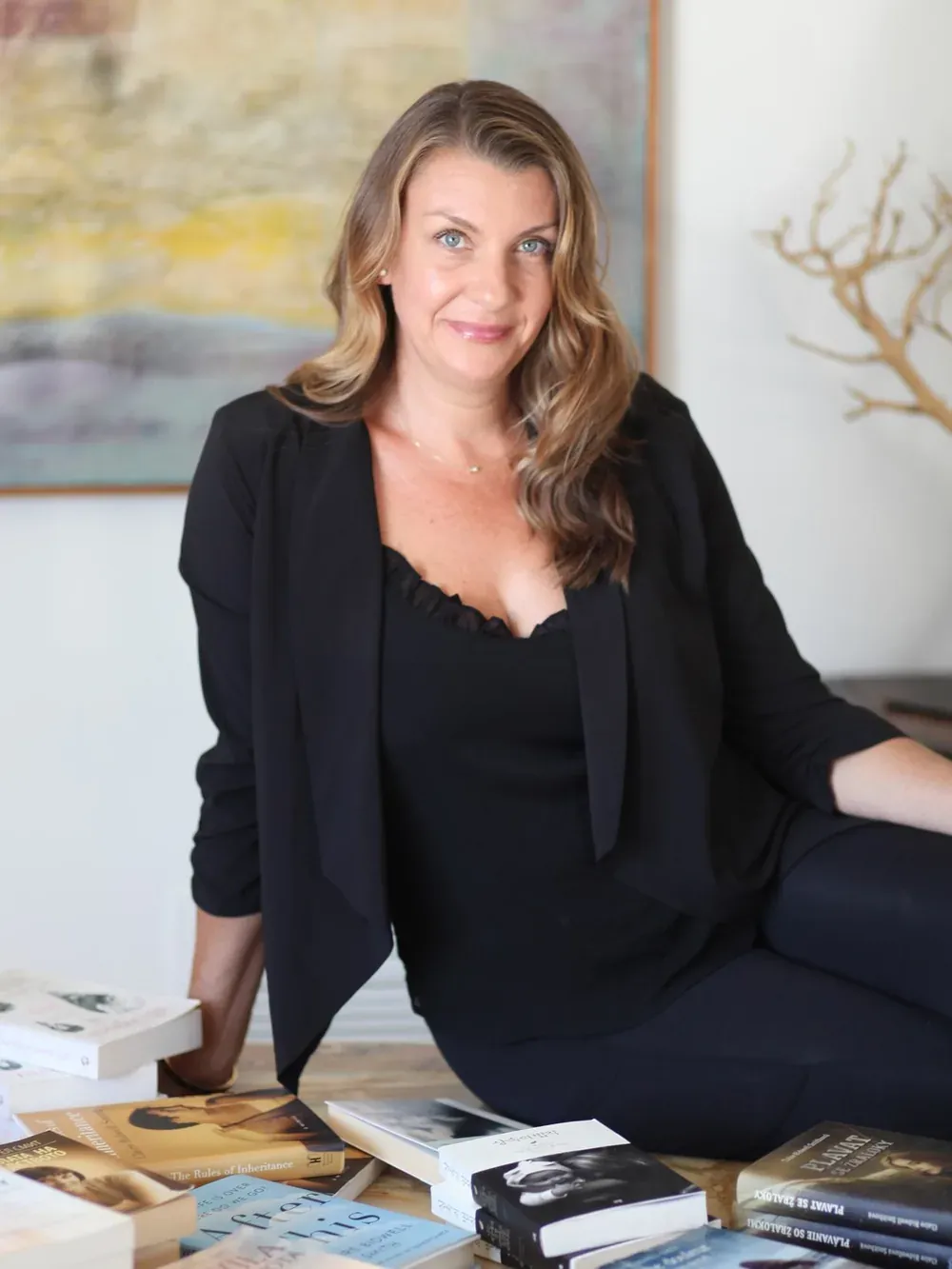
Claire Bidwell Smith is a licensed therapist, internationally recognized grief expert, and the best-selling author of five books published in 22 countries. Drawing on nearly two decades of clinical experience, including her work in hospice and private practice, as well as her own profound experiences with loss, Claire has become a trusted voice in the field of grief and emotional healing. Her work has been featured in The New York Times, The Washington Post, NPR, MSNBC, CNN, Scientific American, Goop, and Oprah, among many others. Through her writing, speaking, and clinical work, Claire is dedicated to helping people navigate the complexities of grief in all its forms, offering compassionate, accessible support for anyone moving through loss.